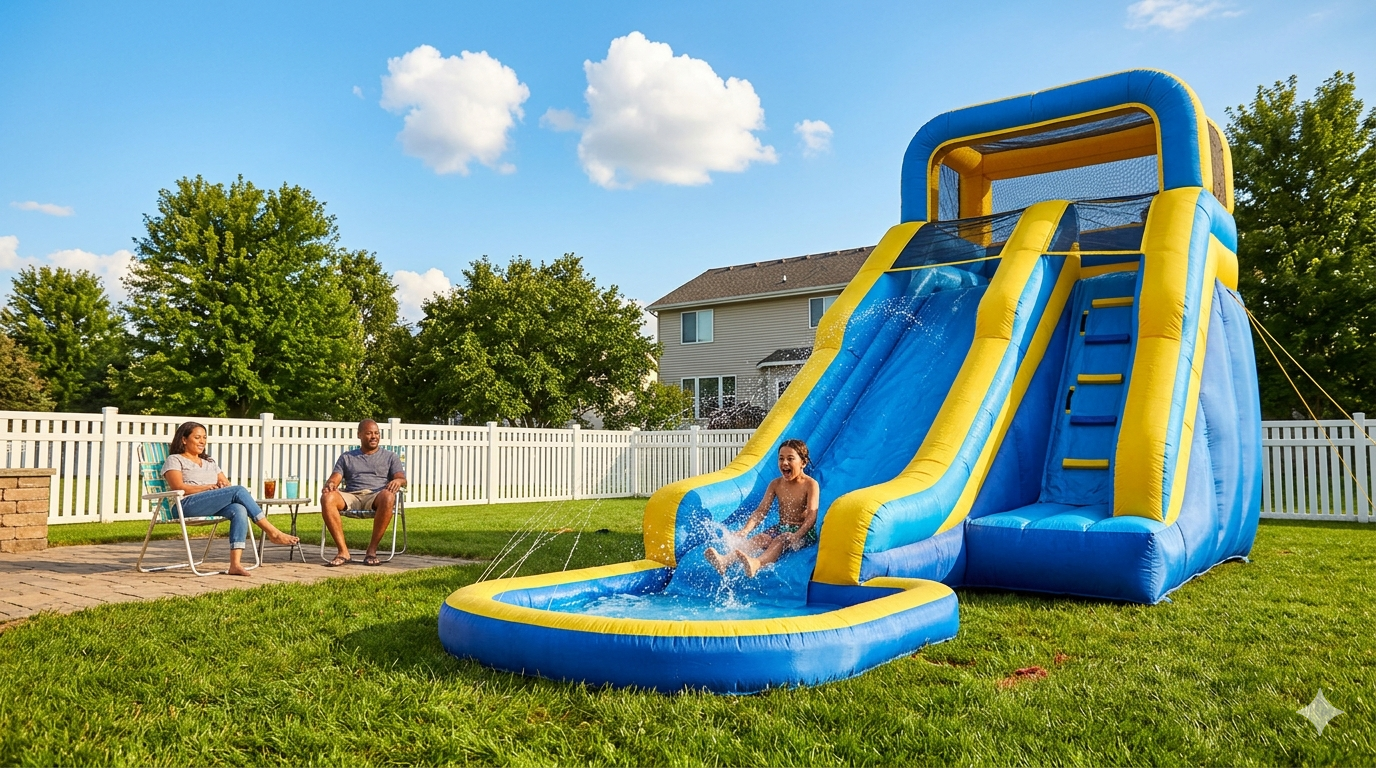
Inflatable water slides are the upgrade move in the bounce house world. More impressive than a standard bouncer, more involving for kids, and — if we're being honest — more fun to watch from a lawn chair with a cold drink. They're also meaningfully more expensive to rent and more demanding to set up. Before you book one, it helps to know what you're actually getting into.
The short answer on price: expect to pay $250 to $500 for a standard residential-sized water slide rental for a full day in most U.S. markets. Larger commercial units push past $600, and in high cost-of-living markets you'll hit those numbers with mid-sized units too. But the price is only part of the picture — water slides have setup requirements that a bounce house doesn't, and a little advance planning will save you real headaches on the day of the party.
Here's everything you need to know.
Pricing by Unit Size
Water slide rental pricing follows size more closely than almost any other variable. Here's what you can realistically expect to pay for a full-day rental (typically 6-8 hours) across most U.S. markets:
| Slide Size / Type | Typical Daily Rate | Best For |
|---|---|---|
| Small residential (10–14 ft tall) | $175 – $275 | Younger kids (under 8), smaller yards, first-time renters |
| Mid-size residential (15–17 ft tall) | $275 – $400 | Mixed age groups, standard backyard parties |
| Large residential / light commercial (18–20 ft) | $350 – $500 | Older kids and adults, larger parties, more dramatic setup |
| Commercial / dual-lane (20–24 ft+) | $500 – $800+ | Block parties, school events, large gatherings |
| Combo unit (water slide + bounce area) | $300 – $550 | Mixed age groups who want more than just sliding |
These are base rental rates before delivery. Add $25–$75 for standard delivery, more if you're outside a company's typical service radius. For a full breakdown of how delivery and other fees stack up, see our bounce house rental cost guide — most of those cost dynamics apply equally to water slides.
How Water Slide Pricing Differs From a Standard Bounce House
If you've rented a bounce house before and you're expecting similar pricing for a water slide, you'll find the numbers run noticeably higher. There are a few real reasons for that, not just upselling.
Wet slides require more labor. Setting up a water slide involves connecting and routing a water supply, not just inflating and staking. Takedown means deflating, draining, and — critically — drying the unit thoroughly before it can be packed up and stored. That's a more involved process than a dry bounce house, and reputable companies price to cover that labor honestly.
The units themselves cost more. Commercial water slides represent a higher equipment investment for rental companies, which flows through to rental rates. A 20-foot commercial water slide costs several thousand dollars to purchase — you're renting a premium piece of equipment.
Weekend and seasonal surcharges hit harder. Water slides are almost exclusively a warm-weather rental. That means demand is heavily concentrated in summer weekends, and pricing reflects it. Full-day rates typically run 1.5 to 2 times the 4-hour rate, and weekend rates add another 40–60% on top of that in most U.S. markets. If you have any flexibility in your party date, a weekday or a morning slot can save you real money.
Regional Price Variation
Where you live has a meaningful impact on what you'll pay. Texas markets including Dallas, San Antonio, and Houston typically offer competitive pricing due to high market density, while rural areas may charge premium rates due to limited local suppliers. Here's a rough sense of how pricing breaks down across the states that make up the bulk of our readership:
| Market | Mid-Size Water Slide (Daily) | Notes |
|---|---|---|
| New York City / NYC Metro | $350 – $600+ | Highest prices in the country; limited yard space drives up demand for larger units |
| Los Angeles / SoCal | $300 – $500 | Year-round demand but high operating costs; competitive market |
| Florida (Miami, Orlando, Tampa) | $250 – $450 | Long rental season keeps supply robust; good availability |
| Texas (Dallas, Houston, Austin) | $200 – $400 | One of the most competitive markets in the country; strong value available |
| Illinois (Chicago metro) | $250 – $425 | Short summer season concentrates demand; book well in advance |
| Ohio / Midwest generally | $200 – $375 | Lower operating costs; some of the best per-dollar value nationally |
| Virginia / Mid-Atlantic | $250 – $450 | Wide variation between suburban DC markets and more rural areas |
As with bounce house rentals, always ask for an all-in quote for your specific address rather than comparing base rates. A lower headline price with steep delivery fees is a common pattern.
Setup Requirements — What Water Slides Need That Bounce Houses Don't
This is the section most first-time water slide renters wish they'd read earlier. Water slides have requirements beyond what a standard bounce house needs, and finding out about them when the crew is in your driveway is not the ideal time.
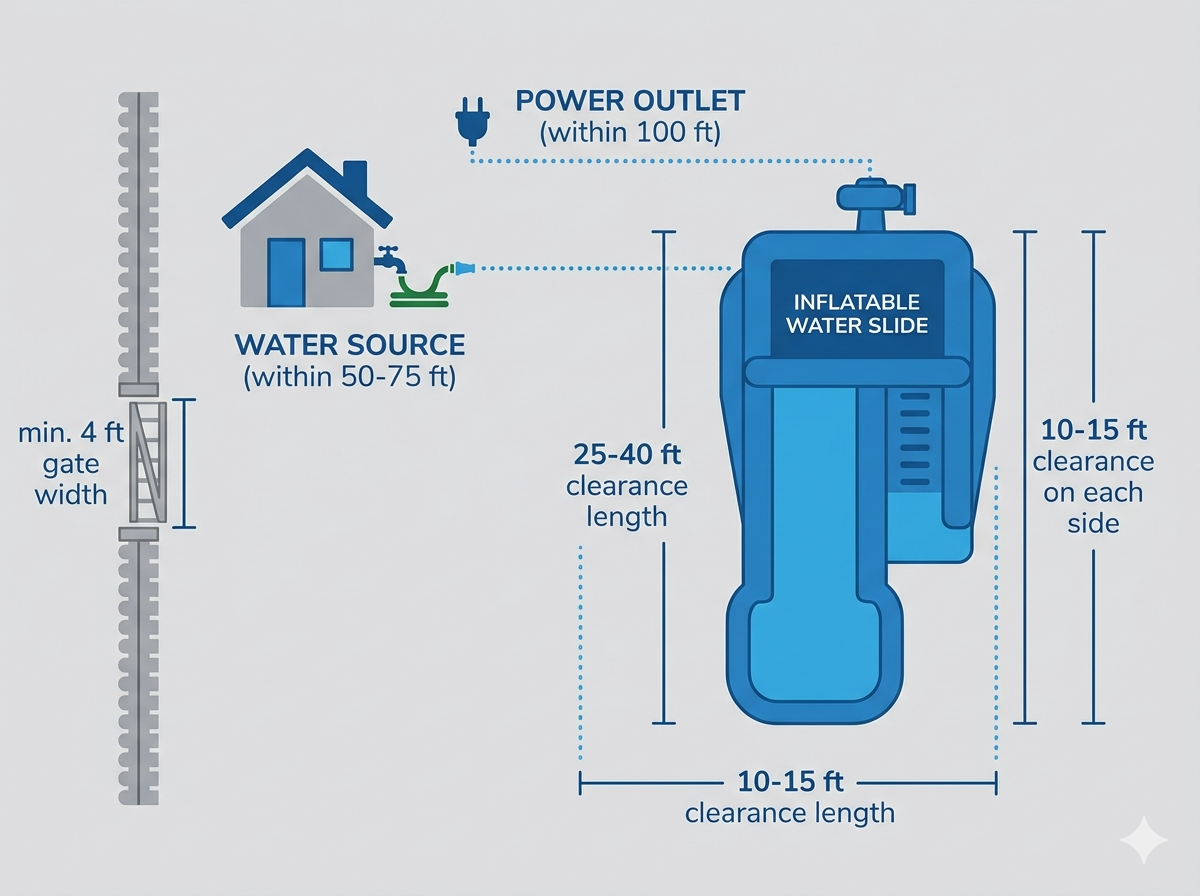
Space — more than you might think. Plan for at least 25 to 40 feet of unobstructed length from the anchor point to the splash pool edge, plus 10 to 15 feet of additional clearance around all sides for safe access and operational buffer. There should be no overhead obstructions — tree branches, power lines, or structures — within the setup footprint. Measure your actual usable yard space before you start browsing units, not the other way around.
Flat ground. Slopes steeper than about 5 degrees can affect the stability and safe operation of the unit. A gentle grade is usually manageable; anything significant is not. If your yard has any notable slope, mention this when booking and ask the company whether your space will work for the specific unit you're considering.
A water source within reach. All inflatable water slides require a continuous water connection to operate — not just at setup, but throughout the entire rental. Most slides need a hose connection within 50 to 75 feet of the setup area. Before you book, walk from your outdoor spigot to your intended setup location and check whether a standard garden hose will reach. If it won't, you'll need a hose extension or a different setup location. For venues without accessible outdoor water — some parks, parking lots, or commercial spaces — ask the rental company whether they can arrange a water tank.
Power access for the blower. Water slides use a continuous-flow blower to stay inflated. You need an electrical outlet within 100 feet of the setup area — a dedicated breaker is preferred, with no major appliances on the same line. Rental companies typically bring extension cords, but confirm this when booking. If your setup location doesn't have accessible power, ask about a generator — most companies offer one as an add-on.
Gate and access path width. A minimum 4-foot-wide access path and gate opening is required for standard units. Some larger slides need a wider opening — confirm dimensions when booking. Check your gate width before delivery day. A 60-inch gate clearance is recommended for larger slides and obstacle courses. This sounds like a minor thing until the crew shows up with a unit that won't fit through your fence.
What to Expect on the Day of the Rental
A full-service water slide rental includes delivery, setup, anchoring, a safety walkthrough, and pickup at the end of your event. The crew typically arrives 45–60 minutes before your rental start time. Setup for a standard mid-size unit takes 20–30 minutes on flat, clear grass; longer if access is complicated or the yard requires extra anchoring.
Before the crew leaves, they should walk you through the basic safety rules: one rider at a time per lane, no diving, approved age and weight limits for the unit. If they skip this walkthrough, ask for it — it's standard practice and you're entitled to it.
Pickup timing varies by company. Some collect the same evening; others allow overnight with pickup the next morning. If your party runs long and you need an extra hour, call the company before your rental window closes — most can accommodate if they don't have a back-to-back booking, sometimes at no charge.
Is a Water Slide Worth the Extra Cost Over a Standard Bounce House?
For summer parties, usually yes — especially for kids seven and older. The experience of a water slide is genuinely more exciting than a bounce house, the cooling effect matters when it's 90 degrees, and the visual impact when it's set up in a backyard is significant. Parents at summer parties with water slides tend to linger longer too, which is either a pro or a con depending on your perspective.
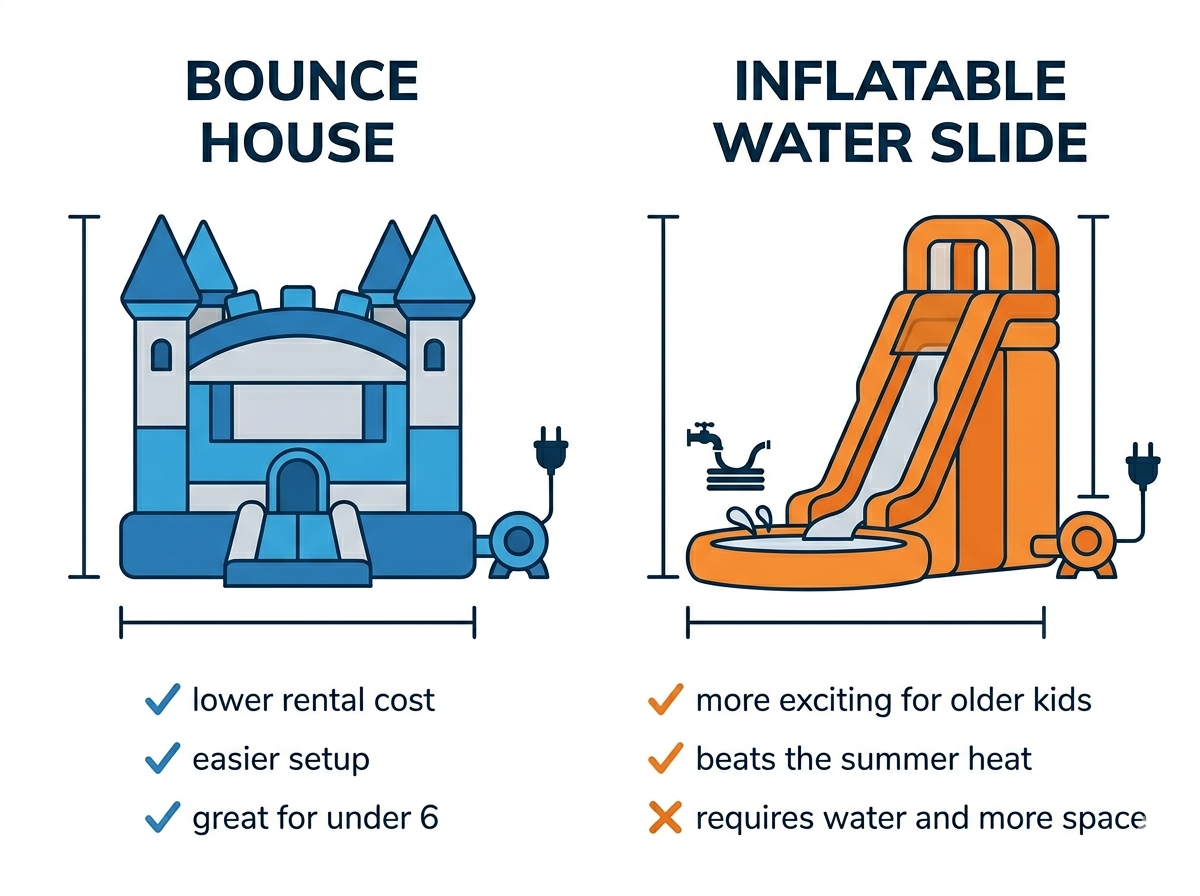
For younger kids (under 6), a standard bounce house is often the better call. Smaller children can find larger water slides intimidating, and the capacity and supervision dynamics are easier to manage with a bounce house. Some combo units split the difference nicely — bounce area for the little ones, slide for the older kids.
If you're weighing whether it makes more sense to rent or buy a water slide outright, see our renting vs. buying guide and our inflatable water slide buyer's guide — the math is similar to bounce houses, though consumer-grade water slides are even further behind commercial rental units in size and quality than bounce houses are.
The Bottom Line
Budget $250–$500 for a standard residential water slide rental in most markets, add delivery, and factor in a potential weekend or peak-season surcharge. Before you book, confirm you have the yard space (25–40 feet of flat, clear length), a water source within reach, and power access for the blower. Handle those three things in advance and you'll have a smooth experience — and a very happy group of wet kids.